

NEWS
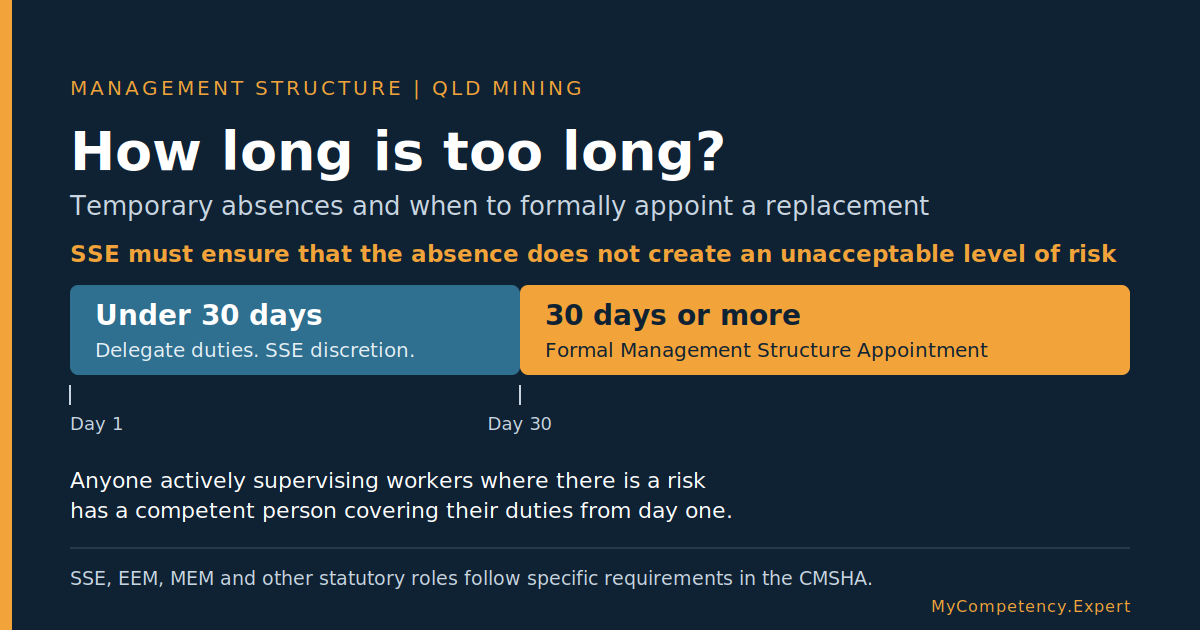

Queensland's mining legislation sets no absence trigger for the other Senior and Supervisory Positions documented in the s.55 (Coal) and s.50 (Metals and Quarrying) Management Structure that are not in statutory positions. This article proposes a practical way for the SSE to achieve an acceptable level of risk in this regard and how to document it.
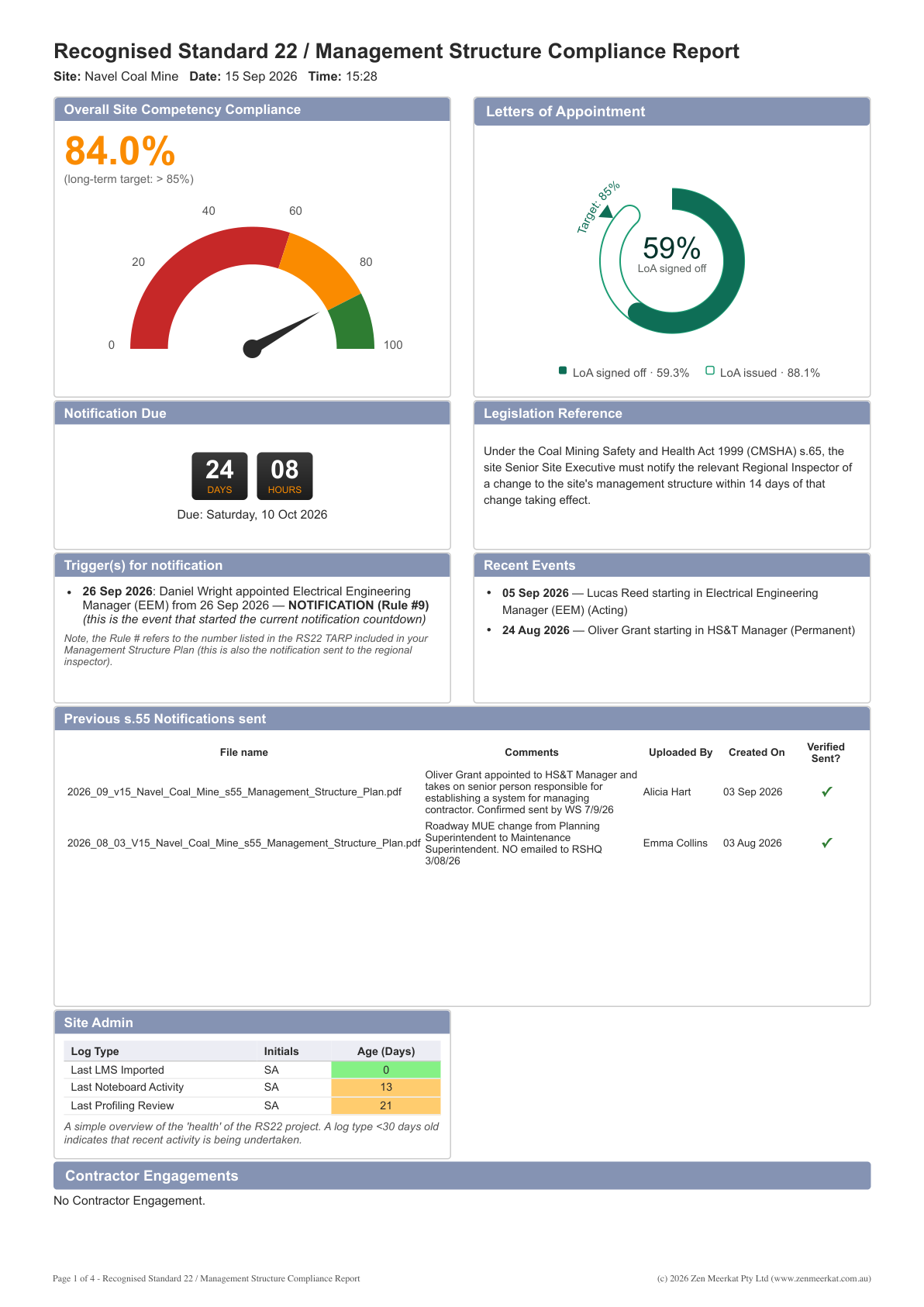
New Management Structure Compliance Report Released
Now available to subscribers of My Competency Expert.This report provides a practical view of how the site is tracking against the management structure and competency requirements set out under legislation. It is especially useful for mine operators, executives and safety leaders who need to understand not just whether compliance is being met, but whether the people, accountabilities and governance arrangements behind the system are actually in place and working.